Clean, reliable water is essential for every home. Yet, many homeowners encounter frustrating issues with their water equipment. Understanding these common problems can help you identify issues early and know when to call a professional. Here are the five most common water equipment problems and how experts efficiently solve them.
1. Water Filtration Issues
A water filtration system is your first line of defense against contaminants. When it fails, you might notice a change in taste, odor, or clarity. Common water filtration issues include clogged filters, bacterial growth inside the unit, or a complete bypass of unfiltered water. The culprit is often a filter that has exceeded its lifespan. Experts fix this by systematically isolating each filter stage, replacing cartridges with manufacturer-approved parts, and sanitizing the housing to prevent biofilm buildup. Regular maintenance schedules are their best tool for prevention.
2. Water Softener Problems at Home
Hard water leaves scale on your appliances, dries out your skin, and spots your dishes. Water softener problems at home typically manifest as hard water returning or the system using too much salt. This can be due to a clogged injector, a malfunctioning control valve, or a depleted resin bed. A technician will first test the inlet water hardness and system settings. The repair often involves cleaning or replacing the injector assembly, reprogramming the regeneration cycle, or, in severe cases, re-bedding the tank with fresh resin to restore ion-exchange capacity.
3. Low Water Pressure Causes
Nothing is more annoying than a weak shower stream. Low water pressure causes can be system-wide or localized to one fixture. While municipal supply issues can be a factor, often the problem lies within your home’s equipment. It could be a clogged sediment filter before your softener, a fouled reverse osmosis membrane, or a failing pressure tank on a well system. Experts use pressure gauges at various points to diagnose the blockage or failure. The solution may be as simple as filter replacement or as complex as repressurizing or replacing a water pump.
4. Reverse Osmosis System Issues
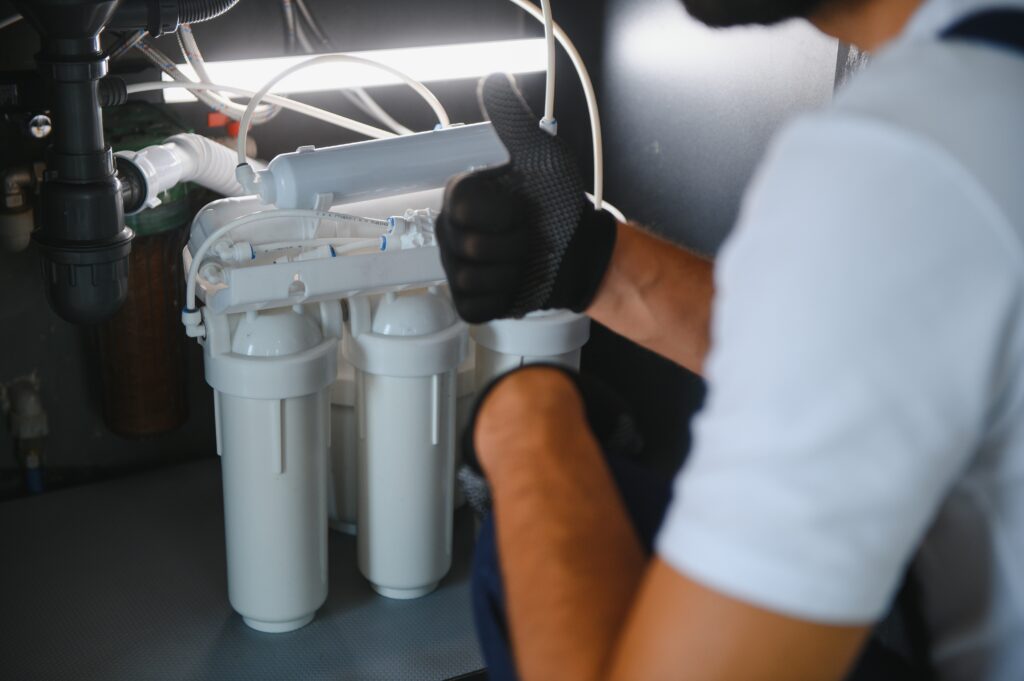
Under-sink RO systems provide ultra-pure drinking water. Common reverse osmosis system issues include slow water production, constant tank drainage, or poor water quality (high TDS). These point to a fouled membrane, a stuck ASO valve, or a failing check valve. The expert’s approach is to test the total dissolved solids (TDS) before and after the membrane. A low rejection rate means membrane replacement. They also check for valve failures and ensure the storage tank’s air pressure is correct, often fixing the problem with precise component swaps.
5. Leaking Water Filter Problems
Water damage can be costly. Leaking water filter problems usually occur at filter housing O-rings, loose sumps, or at the tubing connections. Overtightening a housing can damage the seal as easily as under-tightening. Experts carry a kit of standard O-rings and wrenches. They will shut off the water, depressurize the system, and methodically inspect each connection. The fix involves replacing worn seals, properly aligning and hand-tightening housings, and securing quick-connect fittings. They always perform a thorough pressure test before leaving.
Recognizing the Signs of Water Equipment Failure
Staying ahead of major breakdowns means watching for the signs of water equipment failure. These include unusual noises from pumps or tanks, unexplained increases in water or salt usage, fluctuating water pressure, or a marked decline in water quality. Early detection is key. Home water system troubleshooting starts with checking for simple things: is the unit plugged in? Is the bypass valve engaged? Is there a visible leak? For more complex residential water equipment problems, a professional diagnosis saves time and money.
When Problems Overlap: Home Water System Troubleshooting
Often, one issue can cause another. A faulty water pump can lead to low water pressure. A clogged pre-filter can cause reverse osmosis system issues. This is why a holistic view is essential. Water purification system problems with both a softener and an RO unit require checking that they are sequenced correctly—softener before RO to protect the membrane. Water pump problems at home, like short cycling, often relate to pressure switch or tank bladder issues, not the pump itself. Experts connect these dots.
Is Your Water Equipment Acting Up? Don’t Wait for a Flood or a Dry Glass.
The top water equipment issues we’ve discussed won’t fix themselves. From mysterious leaks to the frustration of low pressure, ignoring problems leads to bigger repairs and potential water damage.
At Everest Water, we specialize in diagnosing and fixing residential water equipment problems efficiently and correctly the first time. Our certified technicians understand how your entire home water system works together.
Schedule a professional diagnosis and repair service today. Enjoy peace of mind and perfect water again.
Frequently Asked Questions (FAQs)
Q: How often should I change my water filters?
A: It depends on usage and water quality, but generally, sediment filters every 3-6 months, carbon filters every 6-12 months, and RO membranes every 2-3 years. Your technician at Everest Water can recommend a schedule based on your specific water.
Q: Can I repair leaking water equipment myself?
A: For minor O-ring replacements on filter housings, if you’re handy, you can try. However, for major leaks or pressurized lines, it’s safest to shut off the water and call a professional to prevent water damage.
Q: What’s the most ignored sign of water softener problems?
A: Using salt at a normal rate but still having hard water. People often think it’s working if it’s using salt, but it could be bypassing or not regenerating properly. This is a key sign of water equipment failure.
Q: Is low water pressure always my equipment’s fault?
A: Not always. It can be a municipal issue or a clog in your home’s pipes. But by checking your water filter and softener first, you can often rule out or confirm the most common low water pressure causes related to equipment.
Q: My RO water is tasting odd again just months after a filter change. Why?
A: This is a classic reverse osmosis system issue. The storage tank might need sanitizing, or the post-filter may be exhausted. Stagnant water in the tank can cause taste problems. A professional sanitization service usually solves it.